
 EN
EN



The relationship between grinder speed and coffee quality has become a central debate among coffee enthusiasts and professionals seeking to extract maximum flavor from their beans. Many coffee aficionados claim that a slower RPM coffee grinder delivers superior results by minimizing heat generation during the grinding process, but understanding the science behind this assertion requires examining the mechanical principles and thermal dynamics at work during coffee grinding operations.
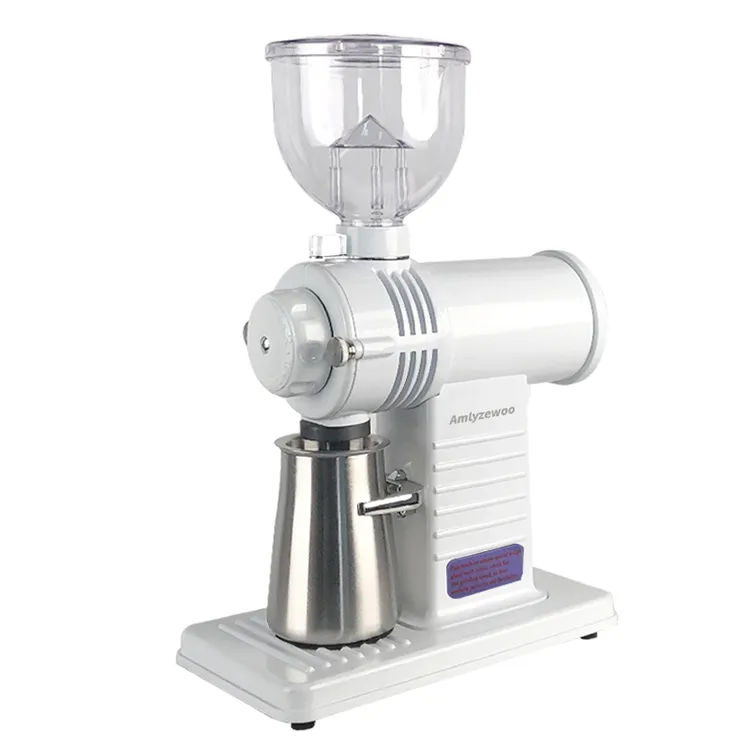
Research into grinding mechanics reveals that the rotational speed of burr grinding mechanisms directly influences both the temperature of ground coffee and the preservation of volatile aromatic compounds that define coffee's sensory characteristics. A slower RPM coffee grinder operates on fundamentally different thermal principles compared to high-speed grinding systems, creating conditions that potentially favor aroma retention and flavor preservation through reduced friction-induced heating effects.
The Science of Heat Generation in Coffee Grinding
Friction-Based Temperature Dynamics
Coffee grinding inherently generates heat through friction between grinding burrs and coffee beans, with the magnitude of heat production directly correlating to grinding speed and contact duration. When a slower RPM coffee grinder operates at reduced rotational velocities, the extended grinding time paradoxically results in lower overall temperature increases due to decreased frictional intensity per unit of contact between grinding surfaces and coffee particles.
The thermal coefficient of friction in coffee grinding systems demonstrates that heat generation follows an exponential relationship with rotational speed rather than a linear progression. This means that doubling the RPM of a grinding mechanism typically results in more than double the heat production, making the case for slower grinding speeds particularly compelling from a thermal management perspective.
Professional grinding equipment manufacturers have documented that slower RPM coffee grinder systems typically maintain grinding chamber temperatures below 40°C during normal operation, while high-speed grinders can easily exceed 60°C under similar conditions. This temperature differential represents a critical threshold for volatile compound preservation in coffee processing applications.
Thermal Impact on Coffee Bean Structure
The cellular structure of coffee beans contains numerous volatile organic compounds that contribute to aroma profiles, with many of these compounds exhibiting thermal sensitivity that makes them susceptible to degradation under elevated temperature conditions. A slower RPM coffee grinder helps preserve these delicate aromatic molecules by maintaining lower grinding temperatures that prevent thermal volatilization and chemical breakdown processes.
Heat-induced changes in coffee bean structure extend beyond simple volatile compound loss to include modifications in oil distribution, cellular wall integrity, and particle cohesion characteristics. Lower grinding temperatures achieved through reduced RPM operation help maintain the natural oil distribution within ground coffee particles, preserving the aromatic carrier mechanisms that transport flavor compounds during brewing extraction.
The crystalline structure of coffee oils and waxes remains more stable under cooler grinding conditions, allowing a slower RPM coffee grinder to preserve the natural encapsulation of aromatic compounds within coffee particles. This structural preservation directly translates to improved aroma retention during storage and enhanced flavor release during brewing processes.
Aroma Preservation Mechanisms
Volatile Compound Retention
Coffee aroma derives from over 800 distinct volatile organic compounds, many of which exhibit varying degrees of thermal sensitivity and evaporation rates under different temperature conditions. The reduced heat generation achieved by a slower RPM coffee grinder creates an environment that favors the retention of these delicate aromatic molecules throughout the grinding process and subsequent storage periods.
Terpenes, aldehydes, and ester compounds that contribute significantly to coffee's aromatic profile demonstrate measurable preservation improvements when grinding temperatures remain below critical threshold temperatures. Research indicates that slower grinding speeds can reduce volatile compound loss by 15-25% compared to high-speed grinding operations, representing a substantial improvement in aroma retention capabilities.
The temporal aspects of aroma preservation also favor slower grinding approaches, as the extended grinding duration allows for more controlled release and redistribution of volatile compounds within the ground coffee matrix. A slower RPM coffee grinder provides sufficient time for aromatic molecules to redistribute evenly throughout the ground coffee mass rather than being rapidly volatilized through excessive heat generation.
Oil Stability and Distribution
Coffee oils serve as primary carriers for aromatic compounds and play crucial roles in flavor delivery during brewing extraction processes. The thermal stability of these oils depends heavily on grinding temperatures, with excessive heat causing oxidation reactions that degrade both aromatic potency and flavor quality in ground coffee products.
Lower grinding temperatures maintained by a slower RPM coffee grinder help preserve the natural emulsification properties of coffee oils while preventing the thermal degradation that leads to rancidity and off-flavor development. This oil preservation translates directly to improved aroma stability and extended shelf life for ground coffee products.
The mechanical action of slower grinding also promotes more uniform oil distribution throughout ground coffee particles, creating a more homogeneous aromatic profile that enhances brewing consistency and flavor extraction uniformity. This improved distribution mechanism represents an additional benefit of reduced-speed grinding operations beyond simple temperature control considerations.
Practical Performance Comparison
Grinding Consistency and Particle Distribution
The operational characteristics of a slower RPM coffee grinder extend beyond temperature control to influence particle size distribution and grinding consistency metrics that directly affect brewing performance and flavor extraction efficiency. Reduced grinding speeds typically produce more uniform particle size distributions with fewer fines and oversized particles that can negatively impact brewing quality.
Burr alignment stability improves under slower grinding conditions due to reduced mechanical stress and vibration effects that can cause temporary misalignment during high-speed operation. This enhanced alignment consistency contributes to improved grinding uniformity and more predictable extraction characteristics in brewed coffee applications.
The extended contact time between burrs and coffee beans during slower grinding operations allows for more controlled particle fracturing processes that follow natural grain boundaries within coffee bean structure. This controlled fracturing mechanism results in particles with more optimal surface area characteristics for brewing extraction while minimizing the production of dust-like fines that can cause over-extraction issues.
Energy Efficiency and Motor Performance
Motor efficiency characteristics in slower RPM coffee grinder systems often demonstrate improved torque utilization and reduced electrical consumption compared to high-speed grinding alternatives. The mechanical advantage gained through reduced rotational speed allows grinding motors to operate within optimal torque ranges while maintaining consistent grinding performance across varying bean densities and roast levels.
Heat generation within grinding motors themselves decreases substantially under slower operating conditions, contributing to improved mechanical longevity and reduced maintenance requirements for commercial grinding applications. This thermal benefit extends the operational lifespan of grinding equipment while maintaining consistent performance characteristics over extended usage periods.
The acoustic characteristics of slower grinding operations typically produce lower noise levels and reduced vibration transmission, making slower RPM coffee grinder systems more suitable for noise-sensitive environments such as residential kitchens, offices, and retail coffee preparation areas where sound control represents an important operational consideration.
Industry Applications and Implementation
Commercial Grinding Operations
Professional coffee roasting and retail operations increasingly recognize the advantages of slower grinding speeds for maintaining product quality and customer satisfaction levels. Commercial implementations of slower RPM coffee grinder systems demonstrate measurable improvements in customer taste evaluations and reduced complaints related to stale or over-processed coffee flavors.
Specialty coffee shops and artisanal roasting operations utilize slower grinding approaches to differentiate their products through superior aroma preservation and flavor quality maintenance. These establishments report improved customer retention and premium pricing capabilities when utilizing slower grinding technologies compared to conventional high-speed grinding systems.
The scalability of slower grinding approaches allows commercial operations to maintain quality standards across varying production volumes while ensuring consistent thermal management and aroma preservation regardless of grinding batch sizes or operational schedules.
Home Brewing Applications
Residential coffee enthusiasts benefit significantly from slower RPM coffee grinder implementations through improved brewing consistency and enhanced flavor extraction capabilities in home preparation environments. The reduced heat generation allows home users to maintain professional-quality grinding standards without requiring sophisticated cooling systems or extensive technical expertise.
Storage considerations for home users favor slower grinding approaches due to improved aroma retention in ground coffee stored for extended periods between brewing sessions. This preservation capability allows home users to grind larger quantities while maintaining flavor quality throughout the consumption period.
The user experience improvements associated with slower grinding include reduced noise levels, improved grinding consistency, and enhanced aromatic characteristics that contribute to overall satisfaction with home coffee preparation processes. These benefits justify the potentially longer grinding times required for slower RPM coffee grinder operation in residential applications.
FAQ
How much slower should a coffee grinder run to see noticeable improvements in aroma preservation?
Optimal grinding speeds for aroma preservation typically range between 300-500 RPM for burr grinders, representing a reduction of 50-70% compared to conventional high-speed grinding systems. This speed reduction demonstrates measurable improvements in volatile compound retention while maintaining reasonable grinding throughput for most applications.
Does slower grinding affect the brewing time or extraction process?
Slower grinding typically produces more uniform particle size distribution that can actually improve brewing consistency and reduce extraction time variations. The enhanced particle uniformity achieved through slower RPM coffee grinder operation often results in more predictable brewing performance rather than requiring significant brewing parameter adjustments.
Can I modify my existing high-speed grinder to operate at slower speeds?
Most high-speed grinder motors are not designed for optimal performance at significantly reduced speeds and may experience reduced torque or overheating issues when operated below their designed RPM ranges. Purpose-built slower RPM coffee grinder systems provide better performance and reliability compared to modified high-speed equipment.
How long can ground coffee maintain its aroma when produced with slower grinding methods?
Coffee ground with slower RPM systems typically maintains peak aroma characteristics for 3-5 days when stored properly, compared to 1-2 days for coffee ground at high speeds. This extended preservation period results from reduced heat exposure during grinding and better retention of volatile aromatic compounds throughout the storage period.
Table of Contents
- The Science of Heat Generation in Coffee Grinding
- Aroma Preservation Mechanisms
- Practical Performance Comparison
- Industry Applications and Implementation
-
FAQ
- How much slower should a coffee grinder run to see noticeable improvements in aroma preservation?
- Does slower grinding affect the brewing time or extraction process?
- Can I modify my existing high-speed grinder to operate at slower speeds?
- How long can ground coffee maintain its aroma when produced with slower grinding methods?